Using Model Dogs to Evaluate the Behavior of Victims of Dogfighting
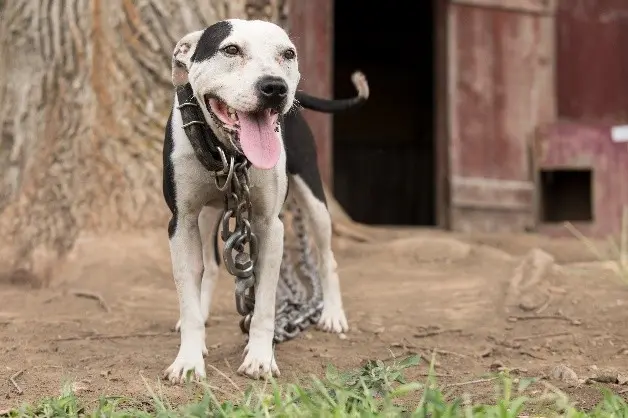
It's a misconception that all dogs from fighting rings are inherently dangerous and should be humanely euthanized. Many victims of dogfighting are friendly toward people and other animals and can be safely placed in adoptive homes, giving them a second chance.
However, it is critical to screen dogs from these populations for aggression toward other dogs (conspecific aggression) before allowing them to participate in shelter playgroups or to be placed in the community.
The question is: how can we effectively screen for extreme aggression toward other dogs confiscated from known or suspected organized fighting cases?
Life-sized plush model dogs can be used as first-pass screening tools when assessing aggression to avoid the ethical and safety concerns raised by exposing friendly shelter dogs (colloquially called “helper dogs”) to potentially extremely aggressive dogs.
Recommended Protocol for Evaluating Victims of Dogfighting with a Model Dog
- We recommend using a model dog first when evaluating adult fight-bred dogs before deciding whether to introduce them to a helper dog.
- Puppies should not be evaluated for dog-directed aggression with a model dog because development and experience may influence how they respond to the model.
- If no physical aggression is exhibited to the model (described below), or if the behavior is ambiguous, the dog should be tested with a helper dog, preferably with the same sex.
- Opposite-sex helper dogs alone are insufficient to screen for aggression because, like dogs from other backgrounds, dogfighting dogs may be less aggressive toward opposite-sex dogs.
- Even if a dog is not aggressive toward the model, be ready to handle defensively when introducing the dog to a helper dog. In some cases, dogs may escalate to aggression in response to behavior from the helper even if the model test was negative. Consider using muzzles for safety.
It is important to consider all of the behavior observed during the model dog screening, as individual behaviors may overlap across subpopulations of dogs. For example, a quarter of dogs that were ultimately determined to be non-aggressive knocked over the model while investigating or attempting to interact with it, but they were not being aggressive toward the model.
Responses to Look for When Screening Victims of Dogfighting Using Model Dogs
It is common for neutral or dog-friendly dogs to approach the model, often quickly, investigate and sniff it, and then lose interest. Some may attempt to solicit play, while others may simply ignore or even avoid the model after first investigating.
Look for species-typical investigatory behaviors directed toward the model, specifically investigating the inguinal and anogenital regions and sniffing other parts of the body, including the muzzle, head, and/or body of the model. Almost two-thirds of extremely aggressive dogs studied failed to investigate the inguinal & anogenital regions of the model dog. An absence of typical investigation is a red flag.
Other behaviors of concern to note include:
- Rushing in and knocking the model over (without first investigating the inguinal and/or anogenital regions)
- Rushing in and biting the model in a non-playful manner
- Gripping the model with a crushing bite
- Biting the model and shaking it
- Tense posturing over the model, especially standing on hind legs while putting forepaws on, or draping forelegs over, the withers of the model dog
- Pinning the model to the ground by partially or fully lying over or on top of the model, with or without simultaneously wrapping forelimbs around the model dog
- Vocalizations, especially low-frequency, high-decibel “guttural growls” were associated with extreme aggression. However, many aggressive dogs did not vocalize.
Key Takeaways
- Our studies and the above recommendations apply only to victims of organized dogfighting. The scientific evidence is mixed on whether or not model dogs are good screening tools in the general shelter dog population.
- The aggressive behavior of dogs from dogfighting backgrounds is qualitatively and quantitatively different from the aggressive behavior we see from dogs that have no history with organized dogfighting activities.
- Using model dogs as a first-pass screen does not completely eliminate the need for helper dogs. Models substantially reduce the risk to helper dogs and evaluators alike by screening out the majority of extremely aggressive dogs. They also allow shelters to screen for dog aggression even when appropriate helper dogs are not available.
- Ideally, staff evaluating dogs from suspected dogfighting cases with models should be experts in defensive handling skills, canine social behavior, and the behavior of dogfighting dogs.
Related Research
Learn more about the ASPCA research supporting our recommendations:
Cussen et al., 2025: Topography of violent intraspecific aggression in a subset of dogs from directionally selected lines of Canis familiaris
Reid et al., 2022: The utility of model dogs for assessing conspecific aggression in fighting dogs
Learn more by reading the ASPCA's Position Statement on Shelter Dog Behavior Assessments.
We have lots more on this subject: